

How Does Fiber Optic Work?
As the demand for faster internet and higher bandwidth continues to grow, fiber optic technology has become the foundation of modern telecommunications. Unlike traditional copper cables that transmit electrical signals, fiber optic systems carry information using pulses of light, enabling faster, more reliable, and long-distance data transmission.
So, how does fiber optic work? In this article, we’ll explore the principles behind fiber optic communication, its key components, and why it has become the preferred technology for broadband, enterprise, and next-generation network infrastructure.
What Is Fiber Optic?
Fiber optic is a communication technology that transmits digital information using light signals instead of electrical signals.
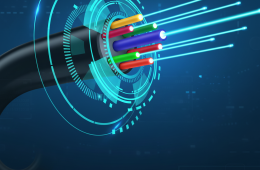
A typical fiber optic cable consists of:
- A glass or plastic core that carries light.
- A cladding layer that keeps the light contained within the core.
- A protective coating that shields the fiber from environmental damage.
- An outer jacket that provides mechanical protection.
This structure allows light to travel over long distances with minimal signal loss.
How Does Fiber Optic Work?
Fiber optic communication is based on the principle of Total Internal Reflection, allowing light to travel through the cable while continuously reflecting within the core.
1. Digital Data Is Created
Every online activity—whether browsing a website, streaming a video, making a phone call, or transferring files—generates digital information.
This information is converted into binary data before transmission.
2. The Data Is Converted into Light
A transmitter equipped with a laser diode or LED converts electrical signals into rapid pulses of light.
Each pulse represents digital information traveling through the network.
3. Light Travels Through the Fiber
The light enters the fiber’s core and continuously reflects off the cladding without escaping.
This process allows signals to travel over many kilometers while maintaining excellent performance and very low attenuation.
Unlike copper cables, fiber optic cables are not affected by electromagnetic interference.
4. The Receiver Converts Light Back into Electrical Signals
At the destination, an optical receiver detects the incoming light pulses and converts them back into electrical signals.
These signals are then processed by networking equipment such as routers, switches, or ONT devices, allowing users to access internet services and digital applications.
The Structure of a Fiber Optic Cable
A fiber optic cable is composed of four essential layers.
Core
The core is the central part of the cable through which light travels.
Higher-quality glass provides better transmission performance and lower signal loss.
Cladding
The cladding surrounds the core and has a lower refractive index.
Its primary purpose is to keep the light inside the core through total internal reflection.
Protective Coating
This layer protects the fiber against moisture, bending, and physical damage.
Outer Jacket
The outer jacket provides additional protection against environmental conditions and mechanical stress.
Why Is Fiber Optic So Fast?
Fiber optic technology offers significant advantages over traditional copper infrastructure.
Extremely High Bandwidth
Fiber networks can carry massive amounts of data simultaneously, making them ideal for high-speed internet and enterprise applications.
Low Latency
Fiber provides minimal transmission delay, making it ideal for:
- Online gaming
- Video conferencing
- Cloud computing
- Financial systems
- Real-time communication
Long-Distance Performance
Signals can travel much farther than copper cables before requiring amplification.
Immunity to Electromagnetic Interference
Fiber optic cables are immune to electrical noise generated by power lines, industrial equipment, and electromagnetic fields.
Where Is Fiber Optic Used?
Today, fiber optic technology supports a wide range of applications, including:
- FTTH (Fiber to the Home)
- FTTB (Fiber to the Building)
- FTTx network infrastructure
- Data centers
- Telecommunications networks
- 5G infrastructure
- Enterprise networks
- Universities
- Hospitals
- Industrial facilities
- Smart city projects
Argedit develops passive fiber optic products and FTTx solutions designed for indoor and outdoor telecommunications infrastructure, supporting the deployment of future-ready broadband networks.
Essential Components of a Fiber Optic Network
A complete fiber optic infrastructure consists of more than just cables.
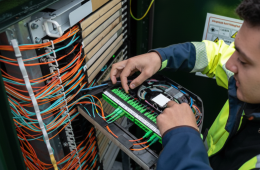
Fiber Optic Patch Panels
Patch panels organize and terminate fiber connections while simplifying maintenance and cable management.
Optical Distribution Frames (ODF)
ODFs serve as central distribution points for fiber backbone connections within telecommunications facilities and data centers.
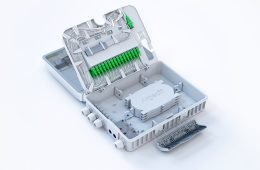
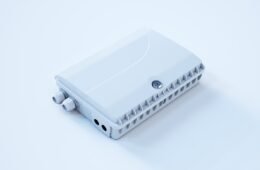
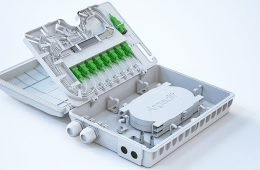
Distribution Boxes
Indoor and outdoor distribution boxes provide secure fiber termination, splicing, and cable distribution throughout FTTx networks.
ONT Holders
ONT holders securely mount Optical Network Terminal devices while protecting fiber connections inside residential and commercial buildings.
Fiber Optic vs. Copper Cable
| Feature | Fiber Optic | Copper Cable |
|---|---|---|
| Transmission Medium | Light | Electricity |
| Speed | Extremely High | Moderate |
| Distance | Very Long | Limited |
| Signal Loss | Very Low | Higher |
| Electromagnetic Interference | Immune | Susceptible |
| Bandwidth | Very High | Lower |
| Reliability | Excellent | Moderate |
Why Fiber Optic Is Essential for FTTx Networks
FTTx (Fiber to the X) architectures rely on fiber optic infrastructure to deliver broadband services directly to homes, businesses, and buildings.
Benefits include:
- Higher network capacity
- Faster internet speeds
- Lower latency
- Improved network stability
- Scalability for future technologies such as 5G and smart cities
As broadband demand continues to increase worldwide, fiber optic infrastructure remains the most future-proof solution available.
Conclusion
Fiber optic technology has transformed the way digital information is transmitted by replacing electrical signals with light. Its exceptional speed, reliability, and capacity make it the preferred choice for modern telecommunications, cloud services, enterprise networking, and next-generation broadband infrastructure.
Argedit supports the future of fiber connectivity by manufacturing high-quality passive fiber optic products, including patch panels, Optical Distribution Frames (ODFs), distribution boxes, ONT holders, and customized FTTx solutions for global telecommunications projects.
Frequently Asked Questions
Why is fiber optic internet faster?
Because it transmits data using light instead of electricity, allowing significantly higher bandwidth and faster data transfer rates.
Do fiber optic cables lose signal over long distances?
Signal loss is minimal compared to copper cables, making fiber ideal for long-distance communication.
Are fiber optic cables affected by electrical interference?
No. Fiber optic cables are immune to electromagnetic interference, ensuring stable and reliable performance.
Where is fiber optic technology commonly used?
Fiber optics are widely used in FTTH networks, telecommunications infrastructure, data centers, enterprise networks, 5G deployments, and industrial communication systems.
What equipment is used in a fiber optic network?
Common components include fiber optic patch panels, Optical Distribution Frames (ODFs), distribution boxes, splitters, ONT devices, and fiber connectivity accessories.
Build Future-Ready Fiber Networks with Argedit
Whether you are deploying FTTH infrastructure, expanding a telecommunications network, or designing next-generation FTTx solutions, Argedit offers a comprehensive portfolio of passive fiber optic products engineered for performance, reliability, and scalability.
Contact the Argedit team to learn more about customized fiber optic infrastructure solutions for your next project.