

As the demand for high-speed internet continues to grow, telecommunications providers require network technologies capable of delivering greater bandwidth with lower operational costs. One of the most widely adopted solutions is GPON (Gigabit Passive Optical Network).
GPON is a passive optical network technology that delivers high-speed data, voice, and video services over fiber optic infrastructure. Widely deployed in Fiber to the Home (FTTH) projects, GPON provides excellent performance, scalability, and cost efficiency, making it one of the preferred technologies for modern broadband networks.
What Does GPON Stand For?
GPON stands for Gigabit Passive Optical Network.
This technology:
- Transmits data over fiber optic cables.
- Uses passive optical components.
- Allows multiple users to share a single fiber connection.
- Delivers high bandwidth and reliable performance.
The term “Passive” refers to the use of optical splitters that require no electrical power between the service provider and the end user. This significantly reduces energy consumption and maintenance costs.
How Does GPON Work?
A GPON network consists of three primary components.
1. Optical Line Terminal (OLT)
The OLT is located at the service provider’s central office.
Its primary functions include:
- Managing network traffic
- Transmitting optical signals
- Controlling subscriber connections
- Coordinating data communication across the network
2. Optical Splitter
The optical splitter distributes a single fiber connection from the OLT to multiple subscribers.
Since the splitter is a passive device, it requires no electrical power, making the network more energy-efficient and easier to maintain.
3. Optical Network Terminal (ONT)
The ONT is installed at the customer’s premises.
Its responsibilities include:
- Converting optical signals into electrical signals
- Delivering internet connectivity to routers or gateways
- Connecting end-user devices to the fiber network
Advantages of GPON Technology
GPON offers numerous benefits compared to traditional copper-based access networks.
High-Speed Data Transmission
GPON supports gigabit-level bandwidth, making it suitable for:
- 4K and 8K video streaming
- Cloud computing
- Online gaming
- Video conferencing
- Smart home applications
Lower Operating Costs
Because GPON relies on passive optical components, network operators benefit from:
- Reduced energy consumption
- Lower maintenance requirements
- Longer equipment lifespan
Long-Distance Connectivity
Fiber optic infrastructure enables high-speed communication across long distances with minimal signal loss.
Reliable Network Performance
Unlike copper cables, fiber optic cables are immune to electromagnetic interference, resulting in stable and consistent network performance.
Easy Scalability
Additional users can be connected without major infrastructure changes, making GPON ideal for expanding residential developments, commercial buildings, and urban broadband projects.
Where Is GPON Used?
GPON technology is widely deployed in various applications, including:
- FTTH (Fiber to the Home)
- FTTB (Fiber to the Building)
- FTTO (Fiber to the Office)
- Enterprise networks
- Data centers
- Smart cities
- Hospitals
- Universities
- Industrial facilities
- Government institutions
Passive Components Used in GPON Networks
A reliable GPON infrastructure depends not only on active equipment but also on high-quality passive fiber optic components.
Key components include:
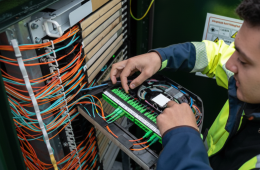
- Fiber Optic Patch Panels
- Optical Distribution Frames (ODFs)
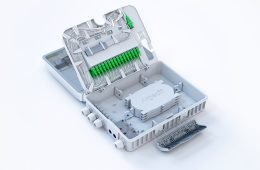
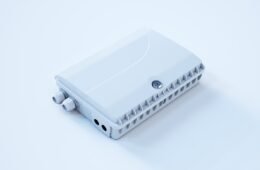
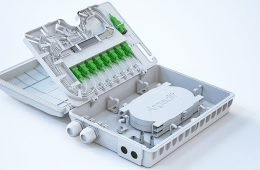
- Fiber Distribution Boxes
- Optical Splitters
- Fiber Adapters
- Fiber Pigtails
- Splice Trays
- ONT Holders
Using premium passive components helps reduce insertion loss, simplify maintenance, and improve long-term network reliability.
Argedit develops passive fiber optic products, including fiber optic patch panels, Optical Distribution Frames (ODFs), indoor and outdoor distribution boxes, and ONT solutions to support reliable FTTx and GPON network deployments.
GPON vs. Point-to-Point Fiber Networks
| Feature | GPON | Point-to-Point Fiber |
|---|---|---|
| Fiber Usage | Shared | Dedicated per user |
| Optical Splitter | Yes | No |
| Infrastructure Cost | Lower | Higher |
| Scalability | High | Moderate |
| Maintenance Cost | Lower | Higher |
Why Is GPON Important in Modern Telecommunications?
As cloud computing, remote work, digital transformation, and smart city initiatives continue to expand, the demand for scalable broadband infrastructure has never been greater.
GPON enables service providers to:
- Connect more subscribers efficiently
- Optimize infrastructure investments
- Reduce operational costs
- Lower energy consumption
- Support future bandwidth demands
For these reasons, GPON has become one of the world’s most widely deployed passive optical network technologies.
Conclusion
GPON is a highly efficient passive optical networking technology that delivers reliable, high-speed broadband services over fiber optic infrastructure. Its scalability, cost-effectiveness, and excellent performance make it the preferred choice for modern FTTH and FTTx deployments.
A successful GPON network depends not only on active equipment such as OLTs and ONTs but also on high-quality passive fiber optic components. Fiber optic patch panels, Optical Distribution Frames (ODFs), distribution boxes, and ONT solutions all play a vital role in ensuring long-term network performance and reliability. Argedit supports next-generation fiber infrastructure with a comprehensive portfolio of passive fiber optic products designed for telecommunications projects worldwide.
Frequently Asked Questions (FAQ)
What does GPON stand for?
GPON stands for Gigabit Passive Optical Network, a fiber access technology that delivers gigabit-speed broadband using passive optical components.
Is GPON the same as FTTH?
No. FTTH (Fiber to the Home) refers to the network architecture, while GPON is one of the technologies used to deliver fiber connectivity within that architecture.
Why is GPON called a passive network?
Because it uses passive optical splitters that require no electrical power between the central office and the subscriber.
What are the main advantages of GPON?
GPON offers high bandwidth, lower operating costs, energy efficiency, long-distance transmission, excellent reliability, and easy scalability.
What equipment is used in a GPON network?
Typical GPON infrastructure includes an Optical Line Terminal (OLT), optical splitters, Optical Network Terminals (ONTs), fiber optic patch panels, Optical Distribution Frames (ODFs), distribution boxes, adapters, and other passive fiber optic components.