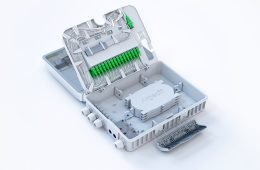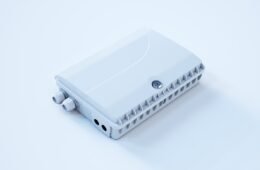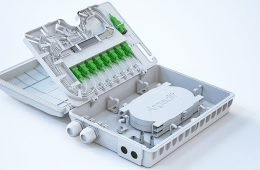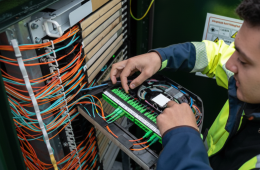


In Outdoor Fiber Distribution, FTTH (Fiber to the Home) infrastructures, outdoor equipment is responsible for much more than managing fiber connections. It must also provide reliable protection against rain, moisture, dust, temperature fluctuations, and other environmental conditions.
When selecting an outdoor fiber distribution box, capacity, mounting configuration, and fiber management are important considerations—but another critical factor is the IP protection rating.
Many FTTH projects require choosing between IP65, IP67, and IP68 protection levels. However, the differences between these ratings and the situations in which each should be used are often misunderstood.
Selecting an inadequate protection rating may lead to water ingress, connection failures, increased maintenance costs, and reduced network reliability over time. For this reason, the IP rating of outdoor fiber distribution boxes should be carefully evaluated during project planning.
What Is an IP Protection Rating?
The IP (Ingress Protection) rating is an internationally recognized classification system that indicates how well a product is protected against external elements.
An IP rating consists of two digits.
For example:
IP65
Where:
- The first digit indicates protection against solid objects and dust.
- The second digit indicates protection against water.
For outdoor fiber distribution boxes, these ratings determine the product’s ability to withstand environmental conditions.
Why Is Protection So Important for Fiber Distribution Boxes?
Fiber optic connections are highly sensitive.
External contaminants such as:
- Dust
- Moisture
- Rainwater
- Condensation
- Mud and dirt
can negatively affect network performance over time if they enter the enclosure.
Therefore, selecting an appropriate protection rating is essential, particularly for outdoor FTTH installations.
Choosing the right IP rating helps:
- Extend infrastructure lifespan
- Reduce maintenance requirements
- Lower operational costs
- Improve network reliability
What Is IP65?
Products with an IP65 protection rating provide:
- High-level protection against dust
- Protection against water jets
For many outdoor installations, this level of protection is sufficient.
Recommended Applications
- Building façades
- Sheltered outdoor locations
- Areas with no risk of immersion
IP65 offers reliable protection against everyday environmental conditions.
Advantages
- Widely applicable
- Suitable for outdoor use
- Cost-effective solution
What Is IP67?
Products rated IP67 provide all the protection of IP65 while offering additional resistance against temporary water immersion.
This protection level includes:
- Complete dust protection
- Enhanced resistance to temporary water exposure
Recommended Applications
- Open-field installations
- Areas exposed to harsh weather conditions
- Regions with heavy rainfall
IP67 is one of the most commonly selected protection levels for outdoor FTTH applications.
Advantages
- Greater environmental resistance
- Improved field reliability
- Better long-term performance
What Is IP68?
IP68 represents one of the highest levels of environmental protection available under the IP classification system.
Products with an IP68 rating are designed to provide:
- Complete dust protection
- Resistance to prolonged and more demanding water exposure
Recommended Applications
- Harsh environmental conditions
- Critical telecommunications infrastructure
- Outdoor installations requiring maximum protection
IP68 is the preferred solution where environmental risks are particularly high.
Advantages
- Maximum protection level
- Superior environmental durability
- Long-term operational reliability
IP65 vs IP67 vs IP68 Comparison
| Feature | IP65 | IP67 | IP68 |
| Dust Protection | High | Complete | Complete |
| Water Protection | Protection against water jets | Protection against temporary immersion | Protection against prolonged water exposure |
| Outdoor Use | Yes | Yes | Yes |
| Harsh Environments | Moderate | High | Very High |
| Telecommunications Infrastructure | Suitable | Highly Suitable | Ideal for critical applications |
How to Choose the Right Protection Rating for FTTH Projects
Choosing an IP rating should not simply mean selecting the highest available protection level.
Instead, several factors should be evaluated together.
Installation Location
The environmental conditions of the installation site should be carefully assessed.
Examples include:
- Building façades
- Street-side installations
- Open-field deployments
- Industrial environments
Each application may require a different level of protection.
Climate Conditions
Regional climate also plays an important role.
Projects located in areas with heavy rainfall or extreme weather may benefit from higher protection ratings.
Maintenance Accessibility
Where maintenance access is limited or costly, selecting a higher protection level can reduce long-term service requirements.
Project Lifetime
Since FTTH infrastructures are expected to remain operational for many years, protection should be selected with long-term performance in mind.
Argedit’s Approach to Outdoor Fiber Protection
Outdoor FTTH distribution and termination equipment should be evaluated not only for fiber management capabilities but also for environmental durability.
Argedit develops passive FTTH infrastructure solutions by considering real field conditions and long-term operational requirements.
This approach contributes to building reliable, organized, and sustainable outdoor fiber networks.
Conclusion
Choosing the appropriate protection rating—IP65, IP67, or IP68—for an outdoor fiber distribution box has a direct impact on the long-term performance of an FTTH infrastructure.
Not every project requires the highest IP rating. The key is to accurately evaluate the installation environment and select the protection level that best matches the project’s requirements.
The right protection rating provides:
- More reliable network performance
- Lower maintenance costs
- Longer equipment lifespan
ultimately improving the overall efficiency of FTTH infrastructure investments.
Frequently Asked Questions
Is IP65 sufficient for an outdoor fiber distribution box?
It can be sufficient for sheltered outdoor environments. However, the specific project conditions should always be evaluated.
What is the difference between IP67 and IP68?
IP68 provides a higher level of environmental protection and is designed for more demanding applications involving prolonged exposure to water.
Which IP rating is most commonly used in FTTH projects?
The answer depends on the installation environment. Outdoor and open-field applications often require higher protection levels such as IP67 or IP68.
Is a higher IP rating always better?
Not necessarily. The appropriate protection level should be selected according to the specific project requirements rather than simply choosing the highest rating.
Why is the protection rating important for outdoor fiber distribution boxes?
It helps prevent dust, moisture, and water from affecting fiber connections, improving network reliability and reducing maintenance requirements.
Contact Argedit
Contact Argedit to identify the most suitable FTTH distribution and fiber termination solutions for your project.
Phone: +90 (212) 294 87 83
Email: bilgi@argedit.com