

Introduction
Planning internet infrastructure in multi-storey buildings requires much more than a standard cabling process. The number of apartments, floor structure, vertical cable route, distribution points and termination equipment must all be evaluated together.
In MDU (Multi-Dwelling Unit) buildings, FTTH infrastructure aims to deliver the fiber connection from the building entrance to each independent unit in an organized and reliable way. Therefore, the right design directly affects not only the initial installation process but also long-term maintenance and operational efficiency.
Argedit contributes to the creation of organized, sustainable and manageable fiber infrastructures in multi-storey buildings with its FTTH passive infrastructure solutions.
What Is MDU FTTH Infrastructure?
MDU FTTH infrastructure refers to the process of bringing fiber optic connectivity into a multi-dwelling building, distributing it across floors and delivering it to end users.
This structure generally consists of the following components:
Building entrance fiber distribution point
Riser cable route
Floor distribution points
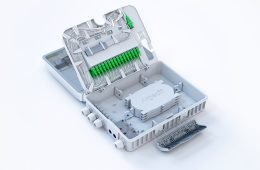
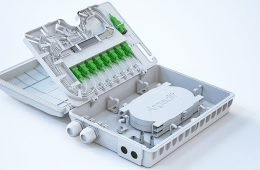
Fiber distribution boxes
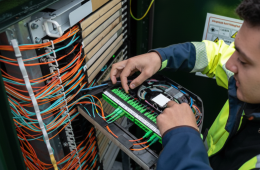
Termination equipment
ONT connection points
Selecting these components correctly improves the performance and manageability of the infrastructure.
Step 1: Analyze the Building Structure and Number of Apartments
Before starting the FTTH design, the physical structure of the building should be examined in detail.
At this stage, the following questions should be answered:
How many floors does the building have?
How many apartments are there on each floor?
Is there an existing vertical cable shaft?
Is there a suitable area at the building entrance for equipment placement?
Is future capacity expansion expected?
This analysis plays a key role in determining the distribution box and riser solution to be used.
Step 2: Determine the Building Entrance Distribution Point
The point where the fiber line enters the building is the starting point of the entire infrastructure.
The equipment to be used at this point should:
Be easily accessible
Be positioned securely
Be suitable for maintenance intervention
Support organized cable management
Proper planning at the building entrance simplifies the entire distribution process that follows.
Step 3: Plan the Riser Cable Route
One of the most important parts of FTTH infrastructure in multi-storey buildings is the riser cable structure.
The riser cable enables the fiber line to be carried vertically to the floors. Therefore, selecting the correct route is critically important.
Key Considerations in Riser Planning
Vertical shaft suitability
Floor transition points
Cable bending radius
Maintenance access
Future capacity requirements
Argedit’s RP Riser Cable Terminal is among the solutions that support organized and secure fiber distribution in multi-storey buildings.
Step 4: Create Floor-Based Distribution Points
Fiber connections must be distributed in an organized way on each floor.
The boxes used at floor distribution points should be selected according to the number of apartments and connection density.
At this point, Argedit’s AP08, AP16 and AP32 distribution boxes offer solutions for different capacity needs.
General Approach to Product Selection
AP08 for lower-density floors
AP16 for medium-density distribution points
AP32 for higher-density applications
When making this selection, not only the current number of apartments but also future needs should be taken into account.
Step 5: Evaluate the Need for Centralized Distribution
In some MDU projects, fiber distribution can be planned not only on a floor-by-floor basis but also through a centralized distribution approach.
In this case, more organized and high-density solutions such as DF24 and DF48 distribution boxes may be preferred.
DF24 and DF48 Use Cases
DF24:
Medium-scale central distribution points
Areas requiring controlled fiber management
Planned in-building distribution applications
DF48:
Large-scale multi-storey buildings
High connection density
Extensive MDU projects
A centralized distribution structure can make maintenance and management processes more organized, especially in large buildings.
Step 6: Plan Termination and ONT Placement
In FTTH infrastructure, the point where the fiber line reaches the end user must also be designed correctly.
When planning ONT placement, the following factors should be considered:
User access
Cable organization
Device safety
Ease of maintenance
Argedit’s MOFE ONT Holder solution supports the organized and secure positioning of ONT devices.
Step 7: Include Ease of Maintenance and Intervention in the Design
FTTH infrastructures are systems designed to be used for many years. Therefore, not only the initial installation but also future maintenance processes should be considered during the design phase.
A well-designed MDU FTTH infrastructure:
Makes fault detection easier
Shortens intervention time
Prevents cable clutter
Reduces operational costs
Step 8: Plan for Future Capacity Expansion
User needs in multi-storey buildings may increase over time. New subscriptions, changes in apartment usage or infrastructure expansions may require additional capacity.
For this reason, product selection should not be based only on current needs, but also on possible future growth.
Product Selection Table for MDU FTTH Infrastructure
| Need | Recommended Argedit Solution |
|---|---|
| Low-density floor distribution | AP08 |
| Medium-density floor distribution | AP16 |
| High-density floor distribution | AP32 |
| Medium-scale central distribution | DF24 |
| High-density central distribution | DF48 |
| Vertical in-building fiber distribution | RP Riser Cable Terminal |
| ONT positioning | MOFE ONT Holder |
Common Mistakes in MDU FTTH Design
Planning Capacity Only for Today
If future subscription growth is not taken into account, the infrastructure may become insufficient in a short time.
Positioning Distribution Points Irregularly
Incorrect positioning makes maintenance processes more difficult and extends intervention time.
Neglecting the Riser Route
Incorrect vertical cable planning can lead to serious operational problems in multi-storey buildings.
Leaving Termination Points Unplanned
Failure to properly plan ONT and termination areas may cause cable clutter on the user side.
Argedit’s Role in MDU FTTH Infrastructure
Argedit offers solutions for different needs in multi-storey building projects with its FTTH passive infrastructure products.
AP08, AP16, AP32, DF24, DF48, RP Riser Cable Terminal and MOFE ONT Holder, which are included in its product portfolio, are among the solutions that can be used for distribution, termination and organized fiber management in MDU projects.
This approach contributes to making in-building fiber infrastructures more organized, sustainable and manageable.
Conclusion
Designing FTTH infrastructure in multi-storey buildings requires the right product selection and planned cable management.
For a successful MDU FTTH design:
The building structure should be analyzed
The riser route should be planned correctly
Floor and central distribution points should be determined
Termination processes should be organized
Future capacity needs should be considered
Argedit’s FTTH passive infrastructure solutions support the creation of reliable and efficient fiber networks in multi-storey buildings.
Frequently Asked Questions
What is MDU FTTH infrastructure?
It is an infrastructure structure that enables fiber connectivity to be delivered from the building entrance to apartments in multi-dwelling buildings.
Why is the riser important in multi-storey buildings?
The riser structure allows the fiber line to be carried between floors in an organized and secure way.
Where are AP08, AP16 and AP32 used?
They can be preferred for floor-based fiber distribution needs according to different density levels.
When are DF24 and DF48 preferred?
They can be used in projects that require central distribution and high-density fiber management.
Why should ONT placement be planned?
ONT points should be planned correctly for cable organization, device safety and ease of maintenance.
Contact Argedit
You can contact Argedit to determine the right distribution, riser and termination solutions for your multi-storey building FTTH projects.
Phone: +90 (212) 294 87 83
Email: bilgi@argedit.com