

What is GPON?
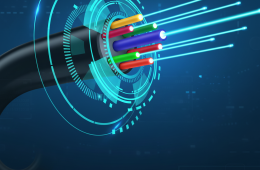
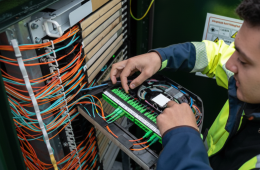
Gigabit Passive Optical Network (GPON) is the most widely used fiber optic access technology today, providing high-speed voice, data, and video services to end-users. Unlike traditional copper-based infrastructures, GPON transmits data using light signals over fiber optic cables, enabling significantly higher bandwidth and longer transmission distances.
How GPON Works
GPON operates as a Point-to-Multipoint (P2MP) architecture. This means a single optical fiber from the service provider’s central office is shared among multiple subscribers through the use of passive optical splitters.
Key components of a GPON system include:
OLT (Optical Line Terminal): Located at the service provider’s central office, the OLT is the starting point of the GPON network.
Splitter: A passive component that divides the optical signal to reach multiple end-users without requiring power.
ONT/ONU (Optical Network Terminal/Unit): The device located at the user’s premises that converts optical signals back into electrical signals for internet, phone, and TV usage.
Key Advantages of GPON
High Speed: GPON typically offers a downstream capacity of 2.488 Gbps and an upstream capacity of 1.244 Gbps.
Efficiency: Because it uses passive splitters, it reduces the need for active electronics in the field, leading to lower energy consumption and maintenance costs.
Long Reach: Data can be transmitted up to 20 km (and sometimes more) without signal degradation.
Scalability: A single OLT port can support up to 64 or 128 users via splitters, making it highly cost-effective for large-scale deployments.
Why is GPON Essential for FTTH?
As digital transformation accelerates, the demand for high bandwidth is increasing exponentially. GPON is the backbone of Fiber-to-the-Home (FTTH) projects because it provides the reliability and speed necessary for 4K/8K video streaming, cloud computing, and high-speed gaming simultaneously across many households.